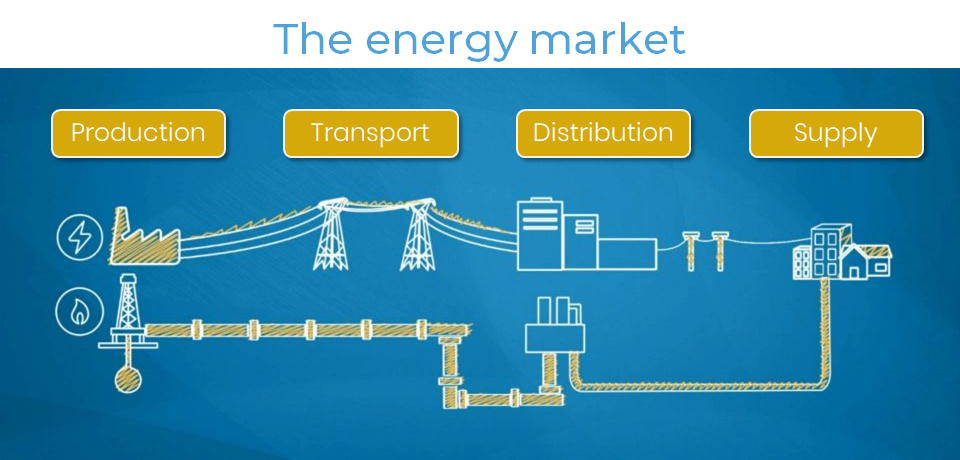
Contact points in the energy market: who are they?
Since the liberalisation of the Walloon energy market in 2007, consumers, who previously only had dealings with a single point of contact, their intermunicipal body, and a single producer, ENGIE (previously Electrabel), now have to deal with a range of new actors.
The energy market is not always easy to comprehend. From distribution network operators (DNOs) to energy suppliers, regulators and mediation bodies, it can be hard to know who to contact to have a meter connected, to change supplier or to make a complaint if there is an error with a meter reading. Follow the guide!
Gas and electricity producers
The producers produce the electricity which they then sell to the energy suppliers.
In Belgium, electricity is produced:
- By nuclear power stations and gas-fired power stations: this is referred to as grey energy from centralised production;
- By wind turbines, photovoltaic panels or hydropower stations: this is referred to as green (so-called renewable) energy from decentralised production.
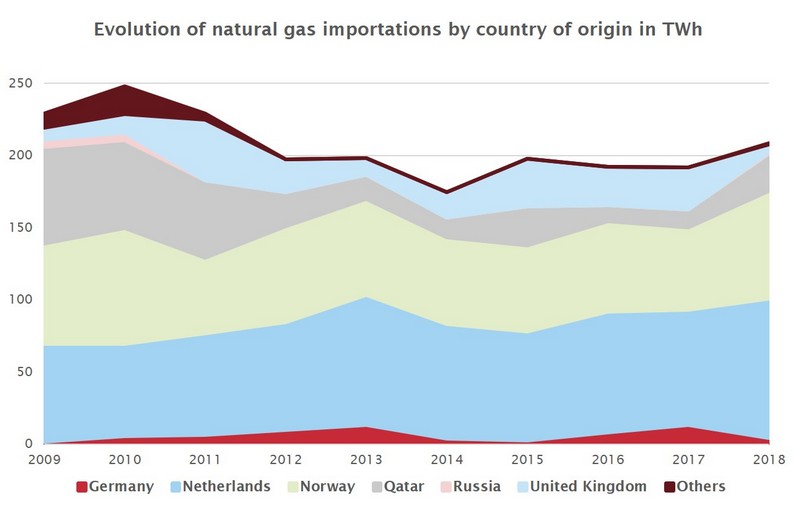
As for natural gas, this is currently imported from the Netherlands, Great Britain, Norway, Russia and countries that produce liquefied natural gas (Qatar); from 2019, when we convert from lean gas to rich gas, this list will no longer include the Netherlands.
Compare now all energy suppliers active in Belgium and save money on your bill !
Transmission system operators (TSO)
The transmission system operators (TSO) are responsible for transporting gas and/or electricity via high-voltage power lines and high-pressure gas pipelines:
- Elia is the transmission system operator (TSO) for high-voltage electricity. The company manages the transmission of electricity from the energy producers to the distribution network operators (DNO);
- Fluxys is the transmission system operator (TSO) for high-voltage natural gas. The company manages the transmission of gas from the gas terminals to the distribution network operators (DNO);
As an end consumer, you cannot contact the TSOs directly.
Distribution network operators (DNO)
The distribution network operators (DNO) transport the electricity and natural gas from the high-voltage/high-pressure power lines and pipelines to the low-voltage/low-pressure power lines and pipelines, and then to your house.
They also look after the maintenance and development of the infrastructure (power lines and gas pipelines). The DNO to which you belong depends on which residential area you are in:
- In Flanders, the DNO that looks after your access to the network is Fluvius;
- In the Brussels-Capital Region, you will deal with Sibelga;
- Ores operates the gas and electricity networks for 197 Walloon municipalities;
- In many municipalities in the province of Liège, the gas and electricity distributor is Resa ;
Click here to check who your distribution network operator (DNO) is.
As an end consumer, you need to contact your DNO if you have any queries about your gas or electricity meter. The DNOs are responsible for:
- Your meter readings;
- Setting up and connecting a new meter;
- Disconnecting an existing meter;
- Any requests for information relating to your meter number or your EAN number;
- Any requests for information regarding your readings and your consumption;
- Installing a budget meter;
- Power cuts or network warnings;
- …
Energy suppliers
The energy suppliers purchase (wholesale) the gas and/or electricity from the energy producers and sell it (retail) to Belgian households.
Did you know? In Wallonia, since the liberalisation of the market in 2007, you can change supplier whenever you want (and, since September 2012, free of charge)! Make immediate savings on your energy bill by comparing the different prices offered by the suppliers.
Discover all the energy suppliers promotions!
Compare electricity and gas prices and switch supplier for free in just a few clicks on Energyprice.be.
As an end consumer, you need to contact your supplier if you have any queries about your energy bill. Your gas and/or electricity supplier sets the prices per kWh that will determine the amount you have to pay for your consumption.
Regulators of the energy market
The regulators (federal and regional) ensure that the gas and electricity markets function properly.
Their role is to supervise the market actors (including approving the transmission tariffs set by Elia and Fluxys) and give advice to the public authorities, thereby ensuring that the interests of Belgian consumers are respected.
- The CREG (Commission de Régulation de l’Électricité et du Gaz [Gas and Electricity Regulatory Commission]) is the federal energy regulator in Belgium. The CREG is also, among other things, responsible for calculating the social tariff every six months;
- The CWaPE (Commission wallonne pour l’Energie [Walloon Energy Commission]) is the official regulatory body for the Walloon gas and electricity markets. The CWaPE ensures compliance with the “public service obligations”, which include a range of measures (such as the social tariff) designed to protect vulnerable households;
- BRUGEL is the regulatory commission for the energy market in Brussels.
Mediation bodies
If you have a dispute with your distribution network operator (DNO) and/or with your energy supplier, there are two mediation services operating concurrently in Belgium which can help you file your complaint.
- The Service de médiation de l’énergie [Energy Mediation Service] (SME): an independent federal service responsible for complaints made against the gas and electricity suppliers concerning issues such as customer service quality, paying your bill or disputing the amount of your bill.
- The Service régional de médiation pour l’énergie [Regional Energy Mediation Service] (SRME) of the CWaPE is the relevant body if you have a dispute with your energy supplier and/or your DNO involving issues relating to meter connections, meter reading errors, budget meter installations, etc.
Who should I contact?
If I want to…
- Compare prices and change energy supplier: an energy price comparison platform;
- Have a dual meter installed, request a meter connection, find my EAN code: the DNO to which you belong (RESA, ORES, SIBELGA);
- If I have a dispute with my energy supplier and/or my DNO: the Regional Energy Mediation Service (SRME) or the Energy Mediation Service (SME);
- If I have queries about the tariffs applied by my DNO or if I want to know the amount of the social tariff: the CREG;
- If I am a protected customer and I want to obtain a certificate so I can receive the social tariff: the CWaPE.
Sources:

Also read on our blog

Owing to the difficult circumstances that have hit Belgium and the rest of the world in 2020, many workers in the country had to e…
Of all the many commitments made by the Belgian energy pact in 2018, the phasing-out of nuclear power by 2025 is no doubt the meas…

In the world of energy, the EAN code is a valuable piece of data. Without it, consumers cannot subscribe to a deal. But why, exact…

Too many! Your latest energy bill is huge? Make sure that there are several reasons why this amount was abnormally raised and you …