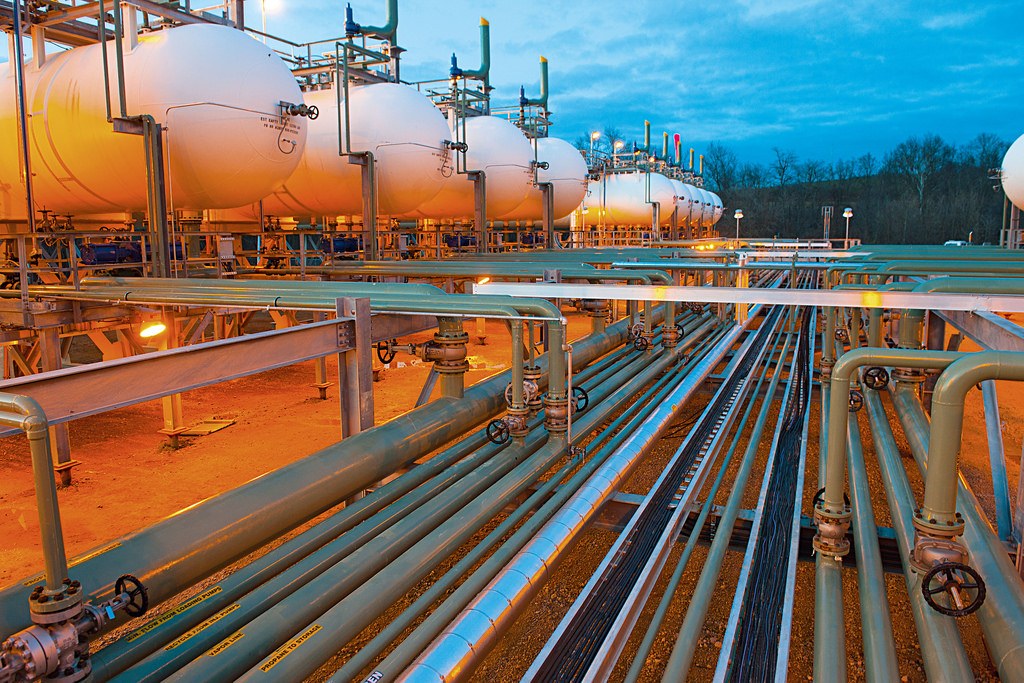
No more poor gas but rich gas that might prove costly
Natural gas consumers, you have been warned: by 2030, you will all be supplied with rich gas. Does the idea seems attractive to you? Unfortunately, in practice, it is not that attractive at all.
The news caused a raucous in the energy sector: soon, it will no longer be necessary to rely on natural gas imported from the Netherlands. Is this good news for Belgium? No, not really. Today, in our country, 1.6 million households are still dependent on this energy for heating and/or cooking. It may well be your case. Although the authorities have given thought to a plan to remedy the problem, it still has a cost. Especially for consumers.
Natural gas from the Netherlands; what is special about it?
One of the riches of the Netherlands has long been its Slochteren deposit, in the Province of Groningen. Thanks to it, the Kingdom has supplied several countries with gas, including ours, since 1966. With no natural gas resources, we are forced to import.
On this basis, our trade with the Netherlands is of course most welcome. That said, we also import this type of fuel from Norway, the United Kingdom or Qatar. These various collaborations allow us not only to meet the national demand, but especially to diversify our gas supply sources. This is an important precaution in order to be as energy-independent as possible, but which leads us today to a delicate situation: our network is supplied by two types of gas.
On the one hand, there is L-gas, from the Netherlands, representing one third of Belgian consumption. On the other hand, there is H-gas, from other countries. What’s the difference between the two? Their heat capacity. As H-gas contains more nitrogen than L-gas, it is classified as rich. And L-gas, therefore, as poor. As they cannot be mixed in the same pipeline, they cover different areas, as shown in the map below.

In blue, L-gas lines and in red H-gas lines. Source: CWaPE
The problem? The Netherlands has announced the near depletion of its reserves resulting in the end of exports by 2030. Knowing that as of 2024 the country will slow down already, it is easy to imagine the lack of fuel in Belgium. Forced to avoid this, Belgium has therefore devised a plan to ultimately accommodate H-gas nationwide.
Substantial work planned throughout the duration
The solution? To adapt the hundreds of thousands of L-gas connections to H-gas. In practice, this means performing work on three levels:
Also read on our blog

In recent months, Energyprice.be has noticed that the price of energy for night rate only meters has risen. Find out the reasons f…

Electricity and gas: invoice 14 June 2023 • 1 Reaction • 10 minutes Published by Mathilde Lepa…
Since 2018, Energy market participants and anti-prevalence associations are jointly demanding that a simplified energy bill be est…
